Hiking is one of the most natural forms of movement humans have ever known. Long before gyms, treadmills, and fitness apps, people walked through forests, climbed hills, crossed valleys, and followed winding trails to survive and thrive. Today, hiking remains one of the simplest, most accessible, and most rewarding ways to improve your overall health.
Whether you’re strolling through a local nature preserve or tackling a rugged mountain trail, hiking offers powerful physical, mental, and emotional benefits. It doesn’t require expensive equipment, complicated routines, or a specific fitness level—just a good pair of shoes and a willingness to step outside.
In this guide, we’ll explore what hiking is, why it’s so effective for health, and how you can safely make it part of your lifestyle.
What Is Hiking?
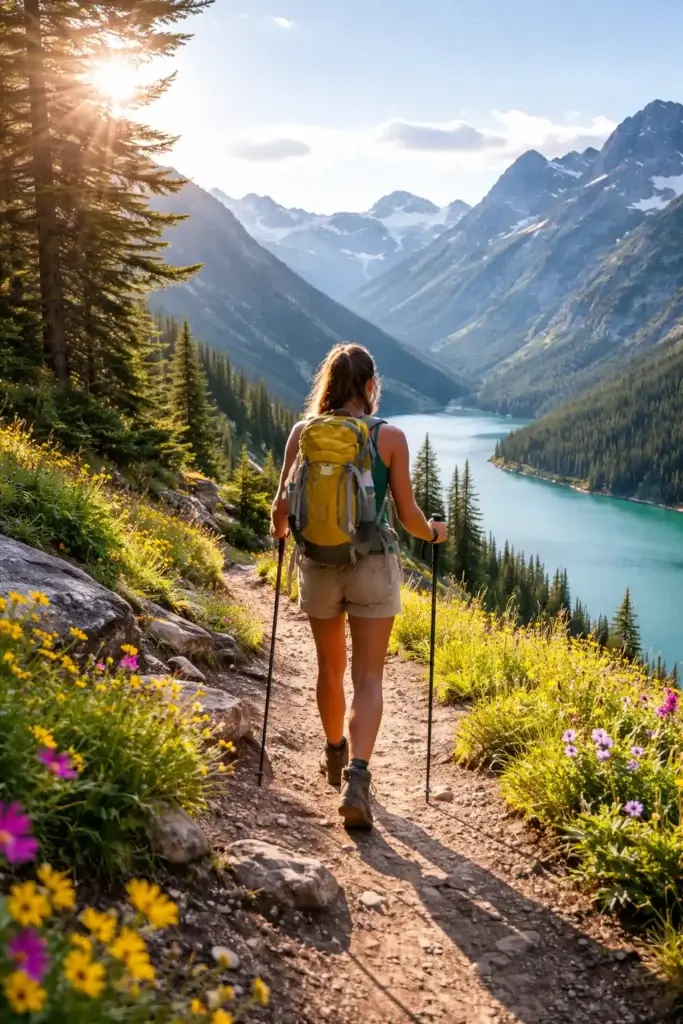
Hiking is a form of walking that takes place in natural environments such as forests, parks, mountains, deserts, or coastal trails. Unlike casual walking around a neighborhood, hiking usually involves uneven terrain, changes in elevation, and longer distances.
Hikes can range from easy, flat trails suitable for beginners to challenging routes with steep climbs and rocky surfaces. This wide range of difficulty is one of hiking’s greatest strengths—it can meet you exactly where you are in your fitness journey.
Physical Health Benefits of Hiking
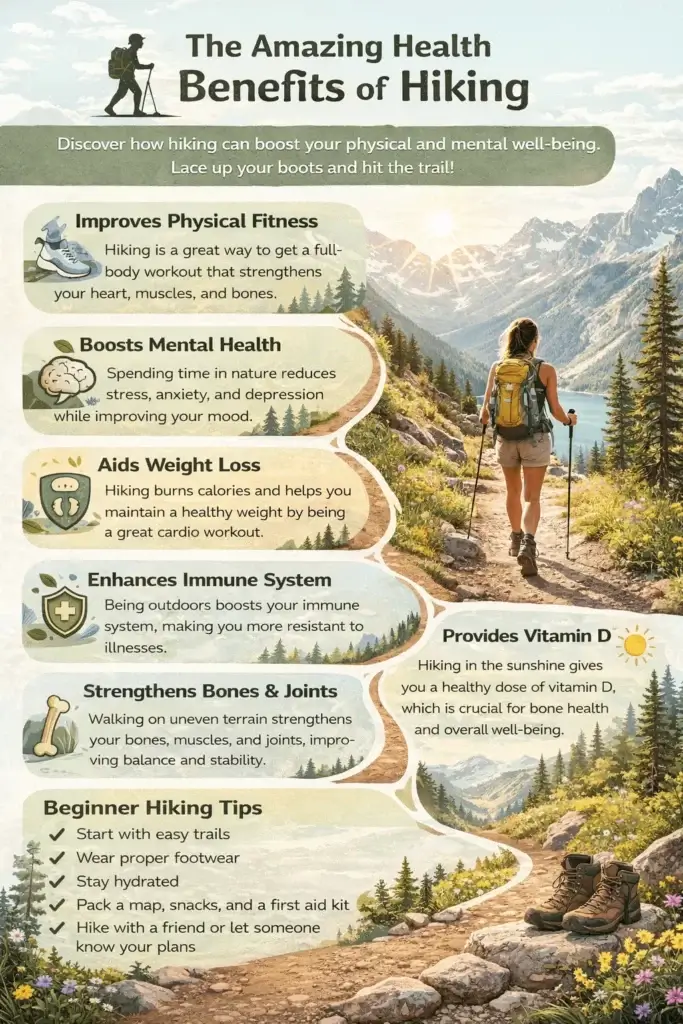
Hiking is a powerful full-body exercise that improves cardiovascular fitness, strength, balance, and overall physical health. Compared to walking on flat ground, hiking challenges your body through varied terrain and elevation changes, making it one of the most effective low-impact workouts available. According to the Centers for Disease Control and Prevention, regular physical activity like hiking improves heart health and endurance.
1. Improves Cardiovascular Health
Hiking is an excellent aerobic exercise. As your heart rate increases, your heart and lungs work harder to deliver oxygen throughout your body. Over time, this strengthens your cardiovascular system.
Regular hiking can:
- Improve heart efficiency
- Increase lung capacity
- Lower resting heart rate
- Reduce the risk of heart disease
Trails with hills or elevation changes provide an added cardiovascular challenge, making hiking even more effective than walking on flat surfaces.
2. Builds Strength and Endurance
Hiking engages multiple muscle groups at once. Your legs do most of the work, but your core, hips, and even upper body play important roles in balance and stability.
Key muscles used in hiking include:
- Quadriceps and hamstrings
- Glutes
- Calves
- Core muscles
- Hip stabilizers
As you hike regularly, these muscles become stronger and more resilient, improving your overall endurance and functional strength.
3. Supports Weight Management
Hiking burns calories while being easier on the joints than many high-impact exercises. The number of calories burned depends on factors such as terrain, pace, elevation gain, and body weight.
On average, hiking can burn:
- 300–500 calories per hour on moderate trails
- 500–700+ calories per hour on steep or rugged terrain
Because hiking is enjoyable and immersive, people often exercise longer without feeling like they’re “working out,” which supports long-term weight management.
4. Improves Balance and Coordination
Uneven terrain forces your body to constantly adjust. Rocks, roots, inclines, and descents challenge your balance and coordination with every step.
This is especially beneficial for:
- Older adults looking to reduce fall risk
- Anyone recovering from sedentary habits
- Athletes seeking better stability and movement control
Over time, hiking strengthens the small stabilizing muscles that are often neglected in traditional workouts.
5. Strengthens Bones and Joints
Hiking is a weight-bearing activity, which means it helps maintain bone density. This is crucial for preventing osteoporosis and age-related bone loss. The National Institute on Aging highlights weight-bearing activities like hiking as essential for maintaining bone density and balance.
Additionally, hiking encourages natural joint movement without excessive impact, helping to:
- Lubricate joints
- Improve flexibility
- Reduce stiffness
When done with proper footwear and gradual progression, hiking can be very joint-friendly.
Mental and Emotional Health Benefits of Hiking
Beyond physical fitness, hiking offers profound mental health benefits. Time spent in nature combined with rhythmic movement helps calm the nervous system, reduce stress hormones, and improve emotional well-being. Research from Harvard Health Publishing shows that exercising in nature can significantly reduce stress and improve mood.
6. Reduces Stress and Anxiety
Spending time in nature has a calming effect on the nervous system. Hiking allows you to disconnect from screens, deadlines, and constant notifications, giving your mind a chance to reset.
Many hikers report:
- Lower stress levels
- Reduced anxiety
- Improved mood
- A greater sense of calm
The combination of movement, fresh air, and natural surroundings makes hiking especially powerful for mental well-being.
7. Boosts Mental Clarity and Focus
Hiking encourages mindfulness. You become more aware of your breathing, your footsteps, and your surroundings. This gentle focus helps quiet mental noise and improve clarity.
Regular hiking can:
- Improve concentration
- Enhance problem-solving
- Reduce mental fatigue
- Support creativity
Some people even find that hiking helps them process emotions or gain perspective on life challenges.
8. Supports Better Sleep
Physical activity combined with natural daylight exposure helps regulate your body’s internal clock. Hiking during the day can make it easier to fall asleep at night and improve sleep quality.
People who hike regularly often experience:
- Faster sleep onset
- Deeper sleep
- More consistent sleep patterns
Good sleep, in turn, supports overall health, mood, and energy levels.
Social and Lifestyle Benefits
9. Encourages Social Connection
Hiking can be enjoyed alone or with others. Group hikes, family walks, or hiking clubs provide opportunities for social connection without the pressure of structured conversation.
Shared outdoor experiences can:
- Strengthen relationships
- Build community
- Encourage accountability
- Make exercise more enjoyable
Even solo hiking can foster a sense of connection to nature and the world around you.
10. Builds Confidence and Resilience
Each hike presents small challenges—finishing a trail, climbing a hill, or navigating unfamiliar terrain. Overcoming these challenges builds confidence and mental resilience.
With time, hikers often notice:
- Increased self-trust
- Greater physical confidence
- A stronger sense of accomplishment
These benefits often carry over into everyday life.
How to Get Started with Hiking (Beginner Tips)
If you’re new to hiking, the key is to start slowly and focus on consistency rather than distance or difficulty. Hiking is highly adaptable, making it an excellent exercise for beginners of all fitness levels.
If you’re new to hiking, starting simple is key.
Beginner tips:
- Choose easy, well-marked trails
- Wear comfortable, supportive shoes
- Bring water and snacks
- Start with short distances
- Hike at a pace that feels comfortable
As your fitness improves, you can gradually increase distance, elevation, and trail difficulty.
Hiking Safety Tips for Beginners and Experienced Hikers
Staying safe on the trail ensures hiking remains a positive and sustainable form of exercise. Proper preparation reduces the risk of injury and allows you to fully enjoy the physical and mental benefits of hiking. The American Hiking Society recommends proper preparation, hydration, and trail awareness for safe hiking.
To get the most benefit from hiking, it’s important to stay safe:
- Check the weather before heading out
- Let someone know your plans
- Stay on marked trails
- Bring basic first-aid supplies
- Listen to your body and rest when needed
Proper preparation ensures hiking remains a positive, sustainable habit.
Making Hiking a Lifelong Habit
One of hiking’s greatest strengths is its sustainability. Unlike extreme workout programs, hiking can adapt to your life, your age, and your fitness level.
You can:
- Hike locally or while traveling
- Adjust intensity as needed
- Combine hiking with other activities
- Enjoy it year-round with proper gear
The goal isn’t perfection—it’s consistency and enjoyment.
Final Thoughts: Why Hiking Is One of the Best Exercises for Overall Health
Hiking is one of the most effective and enjoyable ways to improve physical fitness, mental clarity, and emotional well-being. Its low barrier to entry, adaptability, and connection to nature make it an ideal lifelong exercise for people of all ages.
Hiking is more than just exercise—it’s a full-body, full-mind experience that reconnects you with movement in its most natural form. From improving heart health and strength to reducing stress and boosting mental clarity, hiking offers benefits that extend far beyond the trail.
No matter your age or fitness level, hiking can meet you where you are and grow with you over time. All it takes is one step outside.
If you’re looking for a simple, effective, and deeply rewarding way to support your health, hiking might be exactly what you need.
About the Author