When you think of getting fit, the first thing that probably comes to mind is cardio. And for good reason—cardio training is one of the best ways to improve your heart health, increase stamina, and burn calories. But as a beginner, you might wonder: How much cardio do you really need? Is walking enough? What’s the best type of cardio for you? Cardio training is one of the most effective ways for beginners to improve heart health, increase endurance, and support overall wellness. According to the Centers for Disease Control and Prevention, regular physical activity helps reduce the risk of chronic disease, improves energy levels, and supports both physical and mental health when performed consistently and at an appropriate intensity
Let’s break it all down in a way that makes cardio simple, effective, and actually enjoyable.

Is 20 Minutes of Cardio Enough for Beginners?
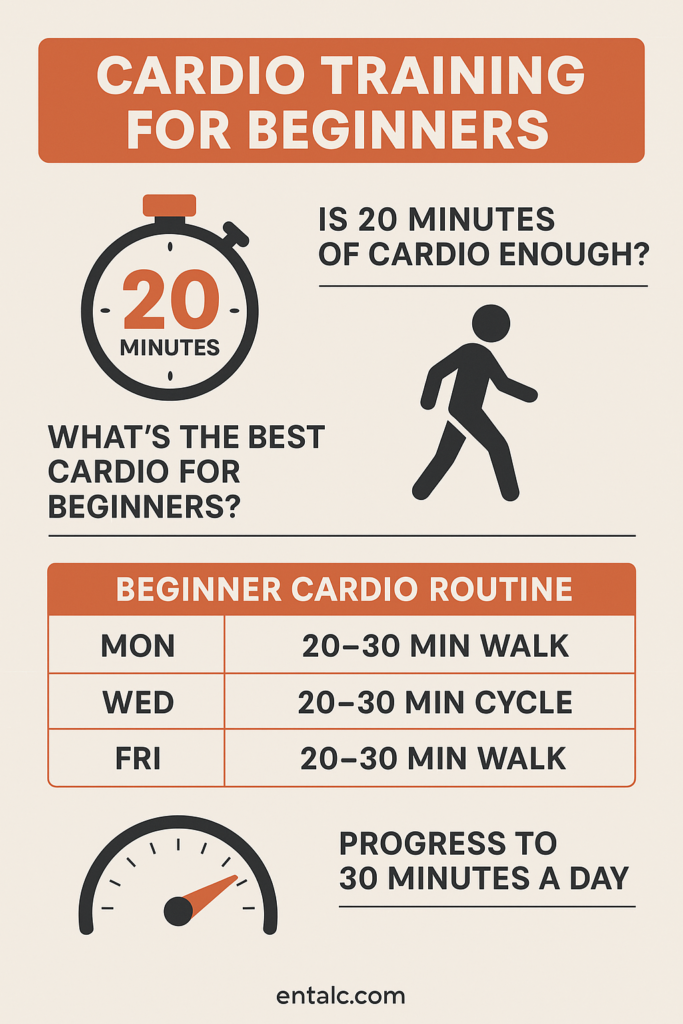
Yes—20 minutes is plenty for beginners. In fact, starting with short, manageable sessions is the best way to build a consistent habit without burning out.
For example:
– 20 minutes of brisk walking
– 20 minutes on a stationary bike
– 20 minutes alternating between walking and light jogging
The key is to move at a pace where you can talk, but you’re slightly out of breath. That’s your “sweet spot” for cardio.
Is 30 Minutes of Cardio a Day Enough Exercise?
Yes—30 minutes of cardio a day meets the CDC’s recommendation of at least 150 minutes of moderate-intensity exercise per week. Doing 30 minutes daily will:
– Improve your heart health
– Increase your energy
– Burn calories to support weight management
– Boost your mood and reduce stress
For beginners, start with 20 minutes and work up to 30 minutes daily. The goal is progress, not perfection.
What Is the Best Cardio to Start Out With?
The best cardio for you is the one you’ll actually enjoy and stick with. For beginners, low-impact options are ideal because they’re gentle on your joints:
– Walking (outdoors or treadmill)
– Cycling (stationary or road bike)
– Swimming (full-body and low impact)
– Elliptical machine
– Rowing machine
Don’t overthink it. If you enjoy the movement, you’ll be more consistent—and consistency is what brings results.
What’s the Best Cardio for Beginners?
If we had to pick one, walking is the best cardio for beginners. Here’s why:
– It’s free and accessible—no equipment needed.
– It’s low impact and safe for almost everyone.
– You can do it anywhere, anytime.
– It’s easy to progress (start with 10 minutes, build to 30+).
Once walking feels easy, you can add light jogging intervals, increase your pace, or try other forms of cardio.
Does Walking Count as Cardio?
Absolutely. Walking is cardio. It gets your heart rate up, strengthens your legs, and improves endurance. The faster and longer you walk, the greater the benefit.
Even a daily 20–30 minute brisk walk has been shown to:
– Improve cardiovascular health
– Reduce risk of chronic diseases
– Support fat loss
– Boost mental health
So yes—walking counts, and it’s one of the best starting points.
Can I Improve Cardio in 20 Days?
Yes—you can see improvement in as little as 20 days if you’re consistent. Here’s what you can expect:
– Less shortness of breath when climbing stairs
– Increased energy throughout the day
– Better endurance during workouts
– Small improvements in weight management
The key is sticking to 20–30 minutes of cardio at least 4–5 days per week. Even in 3 weeks, your body adapts.
How Much Cardio Per Day to Lose Belly Fat?
There’s no way to “spot reduce” belly fat, but cardio helps you burn overall body fat. For fat loss, aim for:
– 30–45 minutes of moderate cardio (like brisk walking or cycling) 5 days per week, or
– 20–25 minutes of HIIT cardio (high intensity) 3 days per week.
Combine cardio with strength training and a healthy diet for the best fat-loss results.
What Is the Best Time of Day to Work Out?
The best time is the time that fits your schedule and that you’ll stick with. But here are some benefits of each:
– Morning workouts: Boost energy, improve consistency, help control appetite.
– Afternoon workouts: Your body temperature and strength are higher, making performance better.
– Evening workouts: Can reduce stress after work, but avoid too close to bedtime if it disrupts your sleep.
The “best” time is whenever you’ll actually do it. Consistency beats timing every time.
Final Thoughts
Cardio training for beginners doesn’t need to be complicated. Start small, stay consistent, and focus on building a routine that fits into your life. Cardio exercise strengthens the heart and lungs while improving circulation and stamina. The American Heart Association explains that regular aerobic activity can help lower blood pressure, manage weight, reduce stress, and improve overall cardiovascular health—making it a key component of any beginner fitness routine.
Here’s your beginner formula:
– Start with 20 minutes of cardio, 3–4 times per week.
– Progress to 30 minutes a day as your stamina improves.
– Choose cardio you enjoy—walking, cycling, swimming, or even dancing.
– Combine cardio with strength training and healthy eating for the best fat-loss and fitness results.
Remember: cardio is not about punishing your body—it’s about moving in a way that makes you feel stronger, healthier, and more alive.