Sorting fact from fiction when it comes to diets can feel overwhelming. Everywhere I look, there’s new buzz about miracle foods, trendy meal plans, and sure-fire ways to lose weight. The problem? Many diet myths keep circulating, making healthy eating seem much more confusing than it needs to be. So, I’m breaking down some of the most common diet myths I’ve heard, sharing what’s true (and what isn’t) about nutrition and weight loss.

Where Diet Myths Come From, and Why They Stick Around
Diet myths usually spread from old beliefs, social media trends, and simple misunderstandings about how food affects our bodies. Sometimes, people jump on the latest fad because it promises quick results or because a celebrity swears by it. But even well-meaning friends or family can pass along advice that isn’t grounded in real science. That’s why knowing where these myths come from helps me spot them a little faster.
Good science takes time, and nutrition studies are often complicated by lots of variables. A single study doesn’t always mean something is true for everyone. Nutrition authorities like the Academy of Nutrition and Dietetics and Harvard T.H. Chan School of Public Health are reliable sources if you want to double-check what you’ve heard. I suggest leaning on those, instead of only what pops up in your social feed.
Busting Popular Diet Myths
I’ve come across plenty of popular diet myths, and I want to clear up a few I hear most often. Some of these myths can really stick in your mind because people repeat them so often, but checking out reliable info helps shake them loose.
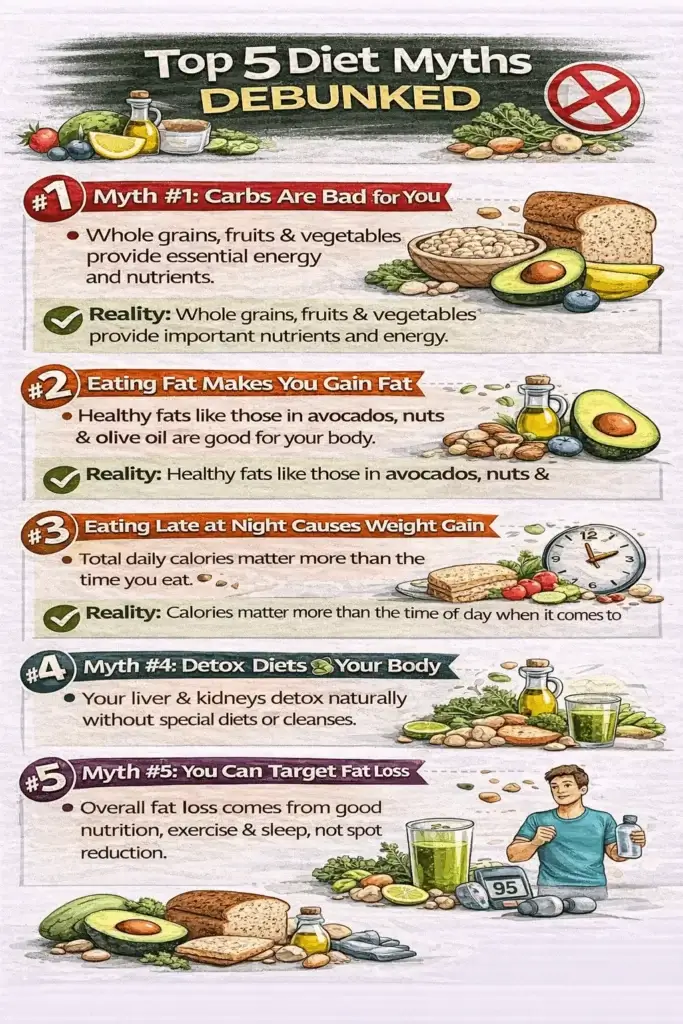
- Myth 1: Carbs Are Bad for You
Carbohydrates get a lot of hate, but they aren’t the enemy. Our bodies use carbs as a main energy source. Sure, eating lots of refined sugar or white bread won’t do your health any favors, but wholegrains, fruits, and even starchy vegetables are packed with vitamins and fiber. According to the CDC, the real trick is to cut back on added sugars and focus on nutrient dense carbs. Including wholegrains like oats or brown rice is a good move for energy and digestion. - Myth 2: Eating Fat Makes You Gain Fat
This old-school idea has stuck around for decades, but it’s based on outdated science. Healthy fats, such as those from avocados, nuts, seeds, and olive oil, help our brains, hormones, and even help us feel full longer. The lowfat craze of the ’90s led many people to cut out these important foods, but now we know balance is key. Harvard Health has a helpful overview on choosing healthy fats: The Truth About Fats: Bad and Good. Moderation and a variety of fats can actually help you get the nutrients your body needs. - Myth 3: Eating Late at Night Causes Weight Gain
The time you eat matters less than what you’re eating and how much. Late-night snacking usually gets a bad rep because people are more likely to reach for chips or sweets. Calories still count, no matter when you eat them. The WebMd says it’s your total daily intake that affects weight, not the clock. Planning ahead with healthier snacks can help reduce late-night regret. - Myth 4: Detox Diets Cleanse Your Body
It sounds convincing; drink juice for three days and flush out all those toxins. But in reality, our kidneys and liver handle detoxing without much help. Most detox diets are short on calories and nutrients, and there’s no solid proof they work. If you want your body to thrive, focus on a balanced diet and stay hydrated instead. More info: NHS: Do detox diets really work?. Also, restrictive cleanses can sometimes do more harm than good by sapping your energy or messing with your digestion. - Myth 5: You Can Target Fat Loss (Spot Reduction)
I’d love a magic move to burn just belly fat, but spot reduction doesn’t work. When you lose weight, your body decides where it’ll come from, not you. Good nutrition, regular exercise, and enough sleep are a realistic combo for overall fat loss. The Healthline also reminds people to steer clear of quick fixes that claim otherwise. Instead, focus on whole body workouts and healthy eating patterns for gradual success.
Overcoming Common Dieting Struggles
Changing eating habits is tough, especially with all this misinformation floating around. Here’s how I’ve handled a few real-life struggles, and why some common myths can make things harder:
- Willpower Isn’t Everything
It’s easy to blame a lack of willpower if a diet slips, but a lot of factors affect eating, like stress, environment, sleep, and even certain medical conditions. Building better habits and forgiving slip-ups helps me get back on track sooner. Creating routines and prepping healthy options in advance smooths the way for making better choices more often. - All or Nothing Thinking
There’s an idea that you have to eat “perfectly,” or you’ve failed your diet. Being flexible, aiming for consistency instead of perfection, works better, and helps keep guilt out of the picture. Allowing room for treats or unplanned meals stops that cycle of restriction and binging. - Fixating on the Scale
Weight will fluctuate daily, and it doesn’t always reflect actual progress. Focusing on energy levels, sleep, fitness, and how clothes fit gives a fuller view of results than relying only on the bathroom scale. Small wins add up, whether it’s sleeping better or having more stamina in workouts.
Why Myth Busting Helps
Unlearning food myths has made it easier for me to approach nutrition with more confidence and less stress. Fact-checking claims before believing them keeps me from jumping onto the next food trend or getting discouraged by temporary stalls. Taking a step back to look over information, rather than reacting instantly to bold headlines, has been a game changer for my peace of mind and my health goals.
Science-Backed Approaches to Healthy Eating
The real magic comes from basics: variety, moderation, and balance. I’ve found these ideas stand up over time, and they’re regularly recommended by experts:
- Fill Half Your Plate With Fruits and Veggies: Loads of nutrients, fiber, and volume to keep you full; easy as that. Mixing up colors and types helps you get a wide range of vitamins.
- Pick Wholegrains Over Refined: Swapping white rice or bread for brown rice or quinoa adds nutrients and keeps blood sugar steadier. Wholegrains also help with digestion and can keep you fuller for longer.
- Include Lean Proteins: Chicken, fish, beans, and tofu boost fullness and provide the building blocks my body needs. Protein helps repair muscles and keeps energy steady.
- Use Healthy Fats in Moderation: Olive oil, nuts, seeds, and avocado can help me feel satisfied after meals.
- Watch Portion Sizes: Eating too much, no matter how healthy, still adds up. Serving meals on smaller plates or prepping snacks in advance works for me. Paying attention to hunger and fullness cues helps avoid mindless eating as well.
More simple, evidence-backed tips are available at RealFood.gov and the U.S. Dietary Guidelines. Following these tips makes healthy eating way less complicated. Adding variety and focusing on what you enjoy also makes these guidelines easier to stick with over time.
My Experience: Small Switches That Stick
I’ve fallen for my share of diet myths in the past, from cutting out wholefood groups to skipping meals because it sounded like a shortcut. Making gradual changes and focusing less on hard rules has made food feel a lot less stressful. I now try to eat a little more mindfully and give myself permission to enjoy what I love without guilt.
One small habit that really helped was meal prepping on Sunday nights. Nothing fancy, but grilling some chicken or chopping veggies in advance made sticking to better choices easier during the week, especially when I was tired or rushed. Another helpful trick is keeping a list of “go-to” meal ideas so I don’t have to think too hard when I’m hungry. Simple things like oats with fruit, a basic salad, or a hearty soup make a big difference and keep me from falling back on the same not-so-nourishing snacks.
Remembering that no food is “offlimits” for good has also made social events more enjoyable. Instead of skipping the birthday cake, I just have a bit and move on, no big deal. Having a consistent approach also lets me enjoy food with friends and family without stressing over every bite.
Cool Features of a Healthy Diet Worth Considering
A healthy diet isn’t a punishment or a boring list of rules. Here are some practical things that stand out, making healthy eating much more fun and far from dull:
- Flexibility: Enjoying a variety of foods means not feeling deprived and lowering the urge to binge on favorite treats later. You don’t have to eat the same thing every day, and mixing it up makes eating more enjoyable.
- Enjoyment: Food is about pleasure, not just fuel. Cooking with herbs, spices, and new recipes keeps meals interesting. Preparing meals as a creative process adds fun to healthy eating and encourages sticking with better habits in the long run.
- Building Habits, Not Quick Fixes: Thinking longterm with changes, rather than crash diets, makes a huge difference. Focusing on habits you can keep up for months and years, instead of days, sets you up for lasting results.
- Improved Mood and Energy: A well-balanced diet not only supports physical health but also gives a boost to mood, increases focus, and provides more stable energy throughout the day. Unpredictable blood sugar swings can lead to tiredness or irritability, so consistent eating patterns really help.
Frequently Asked Questions
Question: Are diet pills or supplements a good shortcut for weight loss?
Answer: Most supplements and pills aren’t regulated the same way as medicine, which means they don’t always do what they claim or could even be unsafe. The FDA has guidance here. For most people, a balanced diet and regular activity is a safer, more effective plan. Supplements might be appropriate if you have a deficiency recommended by a doctor or dietitian, but otherwise they aren’t a miracle solution.
Question: Is skipping breakfast actually bad for you?
Answer: It depends. For some people, skipping breakfast isn’t a huge deal. What matters more is total daily nutrition and finding an eating pattern that feels good and fits your schedule. For others, eating breakfast helps regulate hunger and boost energy. More details at Healthline. It’s really about what works best for you, so pay attention to your own energy and hunger cues.
Question: What if I have dietary restrictions?
Answer: There are healthy options for almost every dietary need, including glutenfree, dairyfree, vegetarian, and more. Working with a registered dietitian can help you create a plan that fits your nutritional needs without leaving you short on key nutrients. Find one here. There are plenty of resources and recipe ideas for a range of diets, so don’t worry if your plate looks different from someone else’s.
Wrapping Up
Sorting out diet myths has made eating better easier for me, and way less stressful. The facts usually boil down to keeping things balanced, eating foods I actually like, and not believing every food trend I see online. With a bit of know-how from trusted sources, making smarter meals and feeling better is totally doable, one step at a time. Building healthy eating is a long-term adventure, not just a quick fix, so be patient and kind to yourself along the way.
About the Author