If you’ve ever tried to lose weight, you’ve probably heard that fiber can help. High fiber foods do a lot more than just keep you full. They help manage cravings, improve digestion, and support gut health. Adding more fiber to your meals is a straightforward way to make healthy eating easier and more satisfying while working toward your weight loss goals. Pairing fiber-rich foods with proven healthy weight loss strategies can accelerate results. Read👉 Healthy Weight Loss Strategies.
Why Fiber Foods Make Weight Loss Easier
High fiber foods are great for anyone looking to shed extra pounds naturally. Fiber slows digestion, so you feel fuller after eating and tend to snack less between meals. Soluble fiber, found in foods like oats, beans, and apples, forms a gel in your stomach and keeps you satisfied for hours. Insoluble fiber keeps things moving and supports regularity. Both types are important for a balanced diet.
Research shows that people who eat more fiber often weigh less and have lower body fat percentages (Harvard T.H. Chan School of Public Health). With fiber, the trick is not to add a lot all at once. Increase your intake gradually so your digestive system can adjust without discomfort. For more simple read 👉nutrition tips, focus on whole foods that naturally support digestion.
Getting Started: Easy Ways To Add Fiber To Your Diet
Adding fiber can actually be pretty simple. Swapping in whole foods that naturally have more fiber is usually the best bet because processed foods often remove much of the fiber. Here are a few ways I put more fiber into everyday meals:
- Start your day with oats or whole grain toast instead of white bread. Top your oats with sliced fruit for an extra fiber boost.
- Mix beans or lentils into soups, stews, and salads for protein and bulk.
- Choose whole fruit over juice, as the skin is where much of the fiber lives. Try apples, pears, or berries for snacks.
- Snack on nuts, seeds, or raw veggies like carrots and snap peas for an easy high fiber crunch.
- Add more veggies to meals. Stir spinach or kale into sauces and casseroles, or toss chopped veggies onto pizzas and grain bowls.
Aim for 25 to 30 grams of fiber per day, as recommended by the American Heart Association. If you’re tracking what you eat, plenty of free online tools can help you estimate your daily intake. Consider keeping a food journal in the first week as you get used to new routines.
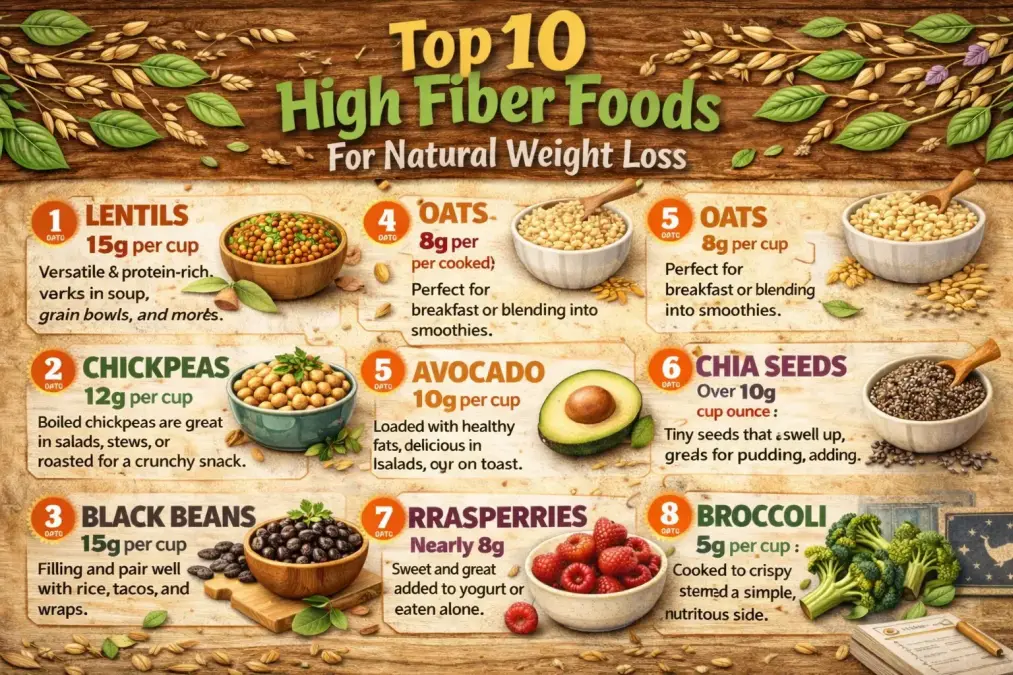
Top 10 High Fiber Foods For Weight Loss
Some high fiber foods are especially helpful when you want support with weight loss. These are my favorites, and I’ve tried to list out what makes each one worth adding to your food routine:
- Lentils
Lentils pack lots of fiber into a small serving, around 15 grams per cup (cooked). They’re super versatile and work in everything from soups to grain bowls. They’re also high in protein, making them useful for plant based meals. - Chickpeas
Boiled chickpeas provide around 12 grams of fiber per cup. They’re great in salads, stews, or as crunchy roasted snacks. I like to toss a handful into veggie stir fries for extra texture. - Black Beans
With about 15 grams of fiber per cup (cooked), black beans are filling and pair well with rice, tacos, and wraps. Their rich, earthy flavor makes them one of my go to choices for easy weeknight dinners. - Oats
Oats are a breakfast classic with about 8 grams of fiber per cup (cooked). They’re great for overnight oats, traditional hot oatmeal, or blending into smoothies for an energy boost that sticks with you. - Avocado
This creamy fruit has about 10 grams of fiber per cup. It’s also loaded with healthy fats, so try avocado slices on toast, in salads, or mashed as a sandwich spread. - Chia Seeds
These tiny seeds offer over 10 grams of fiber per ounce. Chia pudding, sprinkled on yogurt, or mixed into smoothies adds bulk and a fun texture. - Raspberries
Few fruits beat raspberries for fiber, nearly 8 grams per cup. They’re sweet, tart, and perfect on their own, folded into yogurt, or blended into smoothies. - Broccoli
Cooked broccoli has around 5 grams of fiber per cup. I love roasting it for a crispy edge or steaming it as a simple side. Broccoli slaw mixes are also convenient for crunch and fiber in salads. - Pears (with skin)
A medium pear has about 6 grams of fiber, but you’ll want to eat the skin for the full benefit. Pears are crunchy, juicy, and make a satisfying snack by themselves or with nut butter. - Quinoa
Cooked quinoa serves up about 5 grams of fiber per cup. It’s a sturdy base for salads and grain bowls and cooks quickly, so it works when you need a healthy meal in a hurry.
You can mix and match these foods in recipes, snacks, or sides. Swapping them in makes meals more satisfying and helps you stay on track with weight loss. Adding extra frozen berries or nuts to a salad or smoothie is a quick way to pack in even more fiber. Adding chia seeds to your morning shake is easy with these 👉easy smoothie recipes.
Tips For Avoiding Common Fiber Pitfalls
- Drink plenty of water: Fiber soaks up water as it moves through your gut, so it’s really important to stay hydrated to avoid feeling bloated or gassy.
- Increase fiber gradually: Adding too much fiber all at once can upset your stomach. Go slow, and give your body time to catch up.
- Don’t rely on supplements: Whole foods bring more benefits than fiber powder or pills. You’ll get vitamins, minerals, and antioxidants too.
If you have chronic digestive issues or special medical conditions, check in with your doctor or a registered dietitian as explained here at the Mayo Clinic before making major changes to your meals.
Lifestyle Habits To Boost Your Results
Fiber is just one piece of the puzzle for natural weight loss. A few habits work especially well with a high fiber approach:
- Move your body regularly. Walking, cycling, and simple home workouts can all support healthy digestion and weight loss. Even taking the stairs more often helps.
- Get enough sleep. Getting 7 to 9 hours of sleep each night helps you manage hunger hormones and keeps cravings in check, making it easier to maintain your focus.
- Eat mindfully. Slowing down and actually tasting your food allows you to tune in to fullness cues and avoid overeating.
- Balance other nutrients. Pair fiber with protein and healthy fats for long lasting fullness and stable energy. Add some nuts, seeds, eggs, or lean meats to fiber rich meals when you can.
Mixing high fiber eating habits with these lifestyle tweaks supports your overall wellness and makes weight goals easier to reach.
Real World Examples and Simple Meal Ideas
I find it easiest to start with just one or two high fiber foods per meal. Here are some quick combos I often rely on:
- Overnight oats topped with raspberries and chia seeds
- Quinoa salad with black beans, avocado, diced peppers, and lime
- Lentil soup with a side of roasted broccoli
- Pear slices with almond butter for a snack
- Whole grain toast with smashed avocado and sliced tomatoes
- Greek yogurt layered with oats, blueberries, and pumpkin seeds
These meals come packed with filling fiber and are quick to pull together on busy days. I like to keep canned beans, frozen veggies, and whole grains on hand for fast meal prep. For snacks, portion out trail mix or baby carrots in advance for grab and go convenience.
Questions People Ask About High Fiber Weight Loss
Here are a few questions I often see from folks just starting out with high fiber eating habits:
Question: Can I eat too much fiber?
Answer: It’s rare, but eating a lot more than 35 to 40 grams a day can cause bloating or even interfere with absorption of some nutrients. Most people benefit from sticking to the 25 to 30 gram range to avoid issues like cramping or discomfort. Remember that increasing water intake really helps when upping your fiber.
Question: Is raw or cooked fiber better for weight loss?
Answer: Both options have benefits, but many people find cooked veggies are easier on their digestion, especially as you first add more fiber to your routine. Either way, you’ll get fiber’s support as long as you eat a variety of whole plant foods.
Question: Will eating more fiber help me lose belly fat?
Answer: High fiber foods can help reduce overall calorie intake and may have a positive effect on stubborn weight, including around your middle. However, results vary for each person, so try different foods and see what works best for you.
Key Takeaways For Eating More Fiber
Working more fiber into your meals can support natural weight loss, keep you full for longer, and make sticking to healthy habits easier. High fiber foods like lentils, beans, oats, and crunchy veggies offer lots of benefits without extra calories or complicated recipes. Remember to add fiber gradually, drink plenty of water, and enjoy trying a mix of different foods for the best results.
If you want to read more about the science behind fiber and weight management, check out resources from the obesitymedicine.org and the National Institute of Diabetes and Digestive and Kidney Diseases (NIDDK). By gradually adding delicious, high fiber foods to your routine, you can make a real difference on your healthy eating adventure while keeping meals tasty and satisfying. Remember, small steps add up over time, and fiber is a simple, powerful tool to keep you full and moving toward your goals. To stay consistent, learn 👉how to track fitness progress and measure real results.
👉 Related Posts
About the Author