If you’re someone who loves fast, healthy options, smoothies can really change up your daily routine. Nutritious smoothies make it super easy to pack vitamins, minerals, and fiber into your diet, and you don’t need a ton of fancy ingredients. Just blend, sip, and go; no complicated prep or cleanup needed. Whether you’re new to blending or you’re looking for fresh flavors, I’ll walk you through smart tips, favorite ingredients, and simple recipes. You’ll see cool ways to personalize, troubleshoot, and even store your smoothies so you always have a healthy snack at the ready.
Why Smoothies Are a Game Changer for Healthy Eating
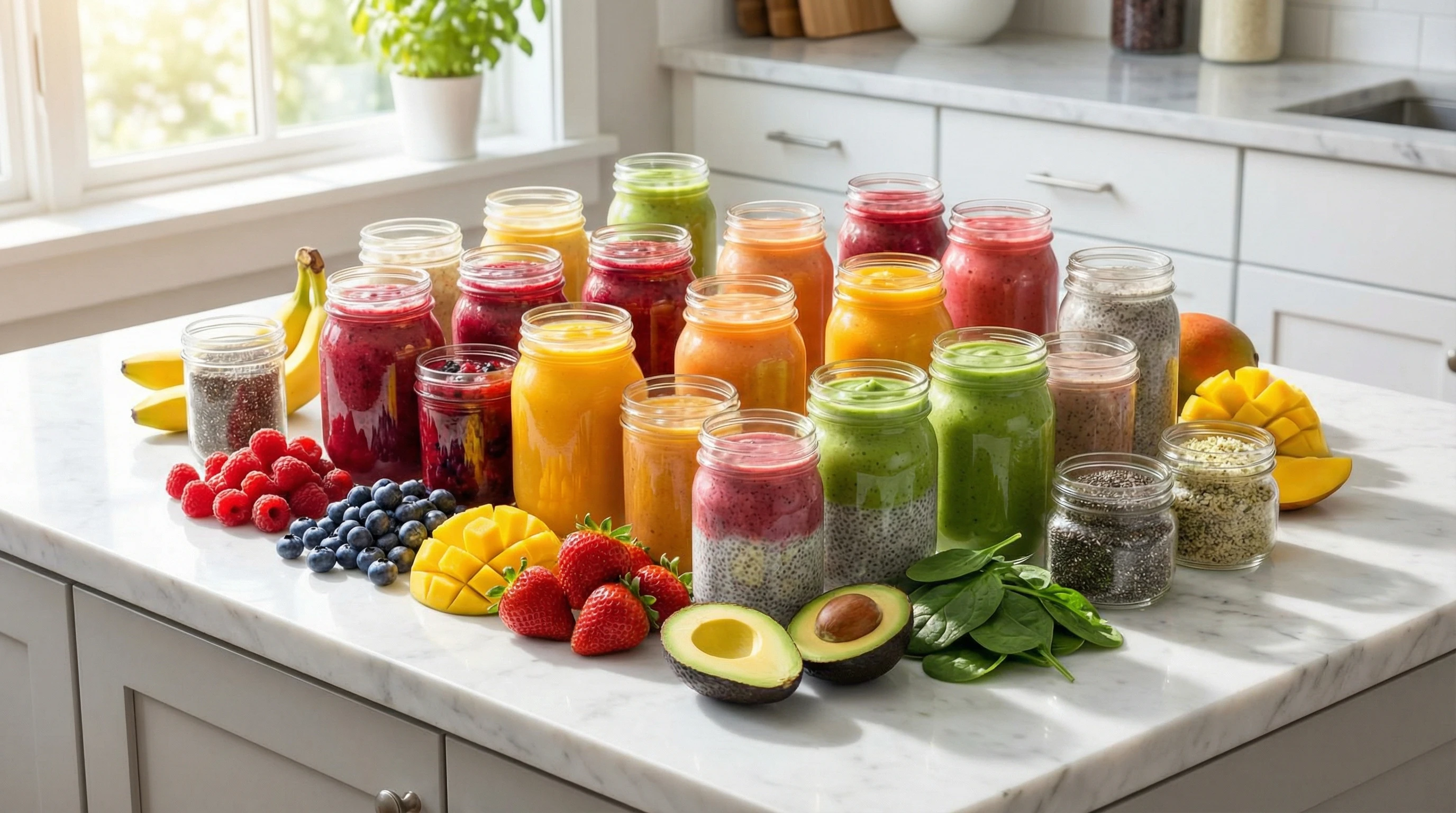
Blending up fruits and veggies isn’t just a trend. It’s a handy hack for squeezing in extra nutrients. Smoothies are quick, versatile, and can help with everything from busy mornings to boosting hydration. Even picky eaters get sneaky vitamins, thanks to the right mix of produce. According to JOHNS HOPKINS Medicine, smoothies support a balanced diet when made thoughtfully, using not just lots of fruit, but good sources of protein and fiber too.
People love smoothies for many reasons:
- Easy to change for allergies or preferences
- Great for boosting fruit, veggie, and fiber intake
- Can be meal replacements, snacks, or postworkout fuel
- Portable. Take them to work, school, or anywhere
I’m a big fan because you can toss in what you like and make each batch work for your taste buds, your health, and your schedule. Plus, there’s no limit to the flavor ideas you can try.
Getting Started: Smoothie Basics Everyone Should Know
If you’re new to the smoothie world, it helps to know the basic building blocks. Smoothies usually have a base (like milk, yogurt, or juice), a mix of fruits and veggies, a boost (protein powders, nut butters, seeds), and extras for taste or health (like spices, greens, or oats).
Start with a simple formula, and you’ll get a creamy, delicious drink every time. Here’s a breakdown:
- Base Liquid: Milk (dairy or nondairy), coconut water, or plain water
- Fruits: Bananas, berries, mango, pineapple. Fresh or frozen
- Veggies: Spinach, kale, cucumber, carrots—great for extra nutrients
- Protein/Fiber Addins: Greek yogurt, protein powder, chia seeds, nut butter, oats
- Flavor Extras: Honey, cinnamon, cocoa powder, vanilla extract
Frozen fruit gives you a cool, thick texture. Fresh fruit works too, just add extra ice if you want it chilled. If you want a vegan smoothie, go for oat milk, almond milk, or coconut milk. For those who want protein, plain Greek yogurt or protein powder are both solid picks.
Keep in mind, balancing your portions keeps smoothies healthy. Loading in too much fruit adds a lot of sugar, even though it’s natural. I use a mix of fruits for flavor plus leafy greens or a bit of veggie so it’s not just a sugar bomb. Healthline offers a solid overview of how to put together nutritious smoothies if you want more tips.
Easy and Nutritious Smoothie Recipes Anyone Can Make
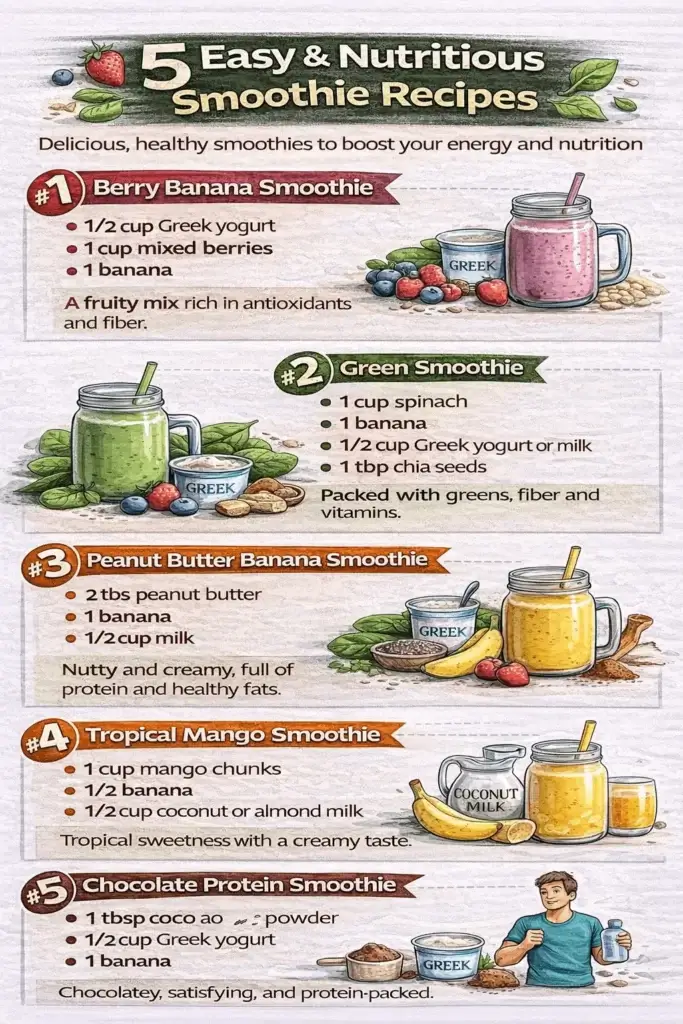
Now for the fun part: actual recipes! Each of these can be put together in about five minutes, and all ingredients can be swapped to suit your taste. I’ll fill in some recipes with details so you can see how it all comes together.
1. Classic Green Smoothie
- 1 cup spinach (fresh or frozen)
- 1 frozen banana
- 1/2 cup pineapple chunks
- 1/2 cup Greek yogurt (or dairyfree alternative)
- 3/4 cup almond milk
- 1 tablespoon chia seeds (optional)
Blend everything until smooth. Pineapple and banana mask the spinach flavor, while chia seeds add fiber, plantbased omega3s, and a little crunch.
2. Berry Oat Breakfast Smoothie
- 1 cup mixed berries (fresh or frozen)
- 1/3 cup rolled oats (uncooked)
- 1/2 banana
- 3/4 cup milk (dairy or nondairy)
- 1 tablespoon almond butter
- 1/2 teaspoon cinnamon
This one keeps you full for hours. Oats blend in to give a creamy texture without much added sugar. For even more protein, add a scoop of vanilla protein powder.
3. Tropical Hydration Smoothie
- 1/2 cup mango (fresh or frozen)
- 1/2 cup pineapple
- 1/2 orange (peeled and sliced)
- 2/3 cup coconut water
- Juice from 1/2 lime
This is a goto for hot days or after a workout. Coconut water is full of electrolytes, and the citrus plus tropical fruit makes it taste sweet and refreshing.
4. Chocolate Peanut Butter Power Smoothie
- 1 banana, frozen
- 1 tablespoon natural peanut butter
- 1 tablespoon unsweetened cocoa powder
- 3/4 cup milk or dairyfree alternative
- 1/2 cup Greek yogurt (plain)
- 1/2 teaspoon vanilla extract (optional)
Great for a postworkout snack or a light dessert. The cocoa plus banana gives a milkshakelike flavor with much less sugar and lots of protein.
5. Creamy Avocado Spinach Smoothie
- 1/2 avocado
- 1 cup fresh spinach
- 1/2 apple, sliced
- 1/2 banana
- 3/4 cup cold water or nondairy milk
- 1 tablespoon flaxseeds
Avocado makes it smooth and creamy without a strong taste. Flaxseeds add fiber and healthy fats. Super filling, especially for breakfast.
Quick Substitutions and Tips
- No protein powder? Try a spoon of nut butter or extra Greek yogurt.
- No chia or flax? Add a couple teaspoons of oats or a bit more fruit for thickness.
- Make it vegan by using plantbased milk, protein, and yogurt options.
- If using fresh fruit only, toss in ice to chill.
Customizing Your Smoothie: Tips for Personalizing Flavor and Nutrition
What I like best about smoothies is how easy it is to switch up the ingredients. Want more greens, or avoid nuts or dairy? You can fine tune every part to match your needs.
- If you’re watching sugar, pick a lower sugar fruit (like berries) and add more greens like kale or spinach.
- For extra protein (perfect for a meal replacement), blend in silken tofu, cottage cheese, or your favorite protein powder.
- People with nut allergies can use sunflower butter or pumpkin seeds for a rich, nutritious flavor.
- Oats or cooked quinoa give you slow release energy, so you stay satisfied longer.
Spices like turmeric, cinnamon, and ginger make the flavors pop and pack in extra nutrition. I often throw in a pinch of turmeric for antiinflammatory benefits or cocoa powder for a chocolate twist.
If you crave variety, try themes: tropical fruit, classic apple pie flavors (apple, oats, cinnamon), or mix veggies with fruits. The combinations are endless. For more ways to keep smoothies exciting, Bon Appetit’s smoothie recipes have cool inspiration.
Pro Tip: Smoothie Prep for Busy Schedules
Mornings can be hectic. Not everyone wants to slice up fruit at sunrise. Prepping smoothie packs is my best trick. Portion out fruit and greens, freeze in reusable containers, then dump into your blender with your liquid base. You’ll make a smoothie in under a minute, zero excuses.
Common Questions About Healthy Smoothies
People ask a lot of great questions when starting out. I’ve rounded up answers to some common ones, so you feel confident blending up a snack or meal anytime.
Question: Will smoothies really keep me full?
Answer: If you build them right, yes. Use protein (yogurt, nut butter, protein powder) and fiber (seeds, oats, greens). Fat (avocado, seeds) helps keep you satisfied too.
Question: Is it okay to drink a smoothie every day?
Answer: Smoothies can fit into a regular, balanced diet. Just make sure you’re not living on fruit alone, keep the sugar in check, and balance your meals. For more details, check out Eat Right.
Question: Are green smoothies actually healthy?
Answer: Yep. Especially if they include a good mix of veggies, protein, and healthy fats. Don’t go all in on fruit or sweeteners. Spinach and kale blend well without a strong taste, so they’re easy to sneak into anything.
Question: How long do smoothies last in the fridge?
Answer: Most smoothies are best fresh, but you can store them in a sealed container for up to 24–36 hours. Give a quick shake or stir before drinking.
Practical Problems and Smart Solutions for Smoothie Lovers
No matter how simple it looks online, sometimes a smoothie just doesn’t turn out. Here’s how I fix common issues:
- Too thin? Add frozen fruit, chia seeds, or a scoop of oats, then blend again.
- Too thick? Pour in more liquid (milk, water, or juice) until it’s sippable.
- Not sweet enough? Try a date, honey, or more ripe banana. Taste as you go.
- Bitter flavor? Add extra fruit, yogurt, or a little vanilla. Spinach is mellow, but too much kale can taste earthy.
- Gritty texture? Blend longer and use softer greens or add more liquid.
If you use a basic blender, put liquids in first, then soft items (bananas, yogurt), stack frozen things last. Most blenders handle this layering well.
If cleanup slows you down, rinse your blender with warm water right away. Seeds and greens won’t stick, and you save yourself extra scrubbing.
Upgrades and Creative Smoothie Ideas
Once you’ve got the basics, it’s fun to set your smoothies apart. Try homemade nut milks, sprinkle on cocoa nibs, swirl in fruit puree, or toss in veggies you might not expect. Cauliflower, sweet potato, or zucchini create creaminess. Once blended, you barely notice the taste, but the nutrients get a boost.
I’ve started tossing hemp seeds or spirulina into my blends for a protein and mineral bump. If your kids or housemates are picky, slip in carrots or beets. You get extra fiber and fun color, but the flavor stays fruit forward when you mix in banana and berries.
For more nextlevel cool combinations and ideas, Simple Green Smoothies has tons of inspiration.
Quick Tips to Make Smoothies Affordable and Ecofriendly
Fresh produce isn’t always cheap or easy to find. Frozen fruits and veggies work great. They’re picked at peak ripeness and last a long time in your freezer. You cut waste and prep time, just scoop from the bag and blend. Buying in bulk or snagging products on sale makes it even cheaper.
Try making nut milk at home using raw almonds and water. It’s easy on the wallet, and you skip unwanted additives. For storage, use reusable containers for smoothie packs. These steps keep things ecofriendly. Composting fruit and veggie peels gives an extra boost to the earth, too.
Wrapping Up: Make Nutritious Smoothies Part of Your Everyday
Nutritious smoothie recipes help you assemble quick meals and snacks that taste great and keep you full. With a blender and a few basic ingredients, you can switch up flavors, pump up your fruit and veggie intake, and never get bored. Building smoothie habits means you’ve always got an easy, delicious way to eat healthier, no matter how hectic life gets.
If you want to dig into smoothie science and more personalized nutrition, check out the FORMETTA for evidence based tips and more recipe inspiration.
About the Author